Securing heritage through conservation easements
Protecting Our History
We work tirelessly to conserve Colorado's rich, diverse heritage by protecting its historic places.

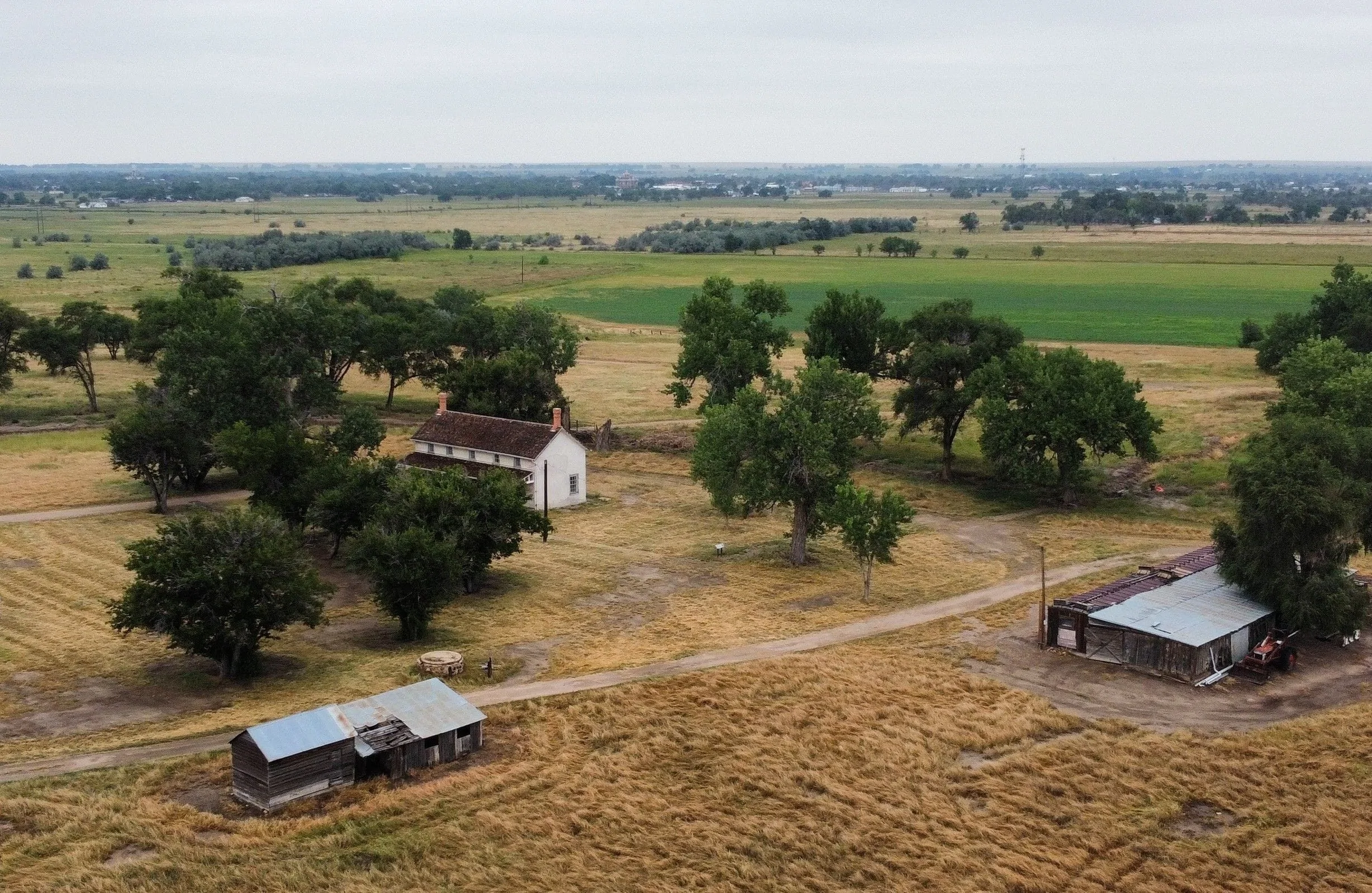
Historic Boggsville settlement in southeast Colorado
Stanley Hotel, Estes Park
Why donate a conservation easement?
A conservation easement allows a property owner to use, transfer, or lease their property –
with peace of mind knowing its key historical features will be forever recognizable and protected.
- Prevents demolition and unauthorized changes.
- Potential grant funding and tax benefits.
- Perpetual protection - easement agreement stays with the property and future owners.
World's Wonder View Tower, Genoa
What is a conservation easement?
A conservation easement - or "preservation easement" - is voluntarily granted on a historically-designated property. It allows a qualified third-party organization legal rights to monitor the property’s condition, prevent demolition, and to oversee future development, repairs, and alterations to identified features. An easement grantor relinquishes partial development rights, agrees to maintain the property’s historic features, and to work with the easement holder on site monitoring and authorized changes.
Mancos Opera House, Mancos
Why work with the Colorado Historical Foundation?
We've been stewarding conserved properties since 1981 and have more than 120 conservation easements in our statewide portfolio.
The Colorado Historical Foundation is the only qualified organization certified by the State to accept easements on historic properties from owners pursuing a state tax credit.
Our knowledgeable staff is solution-oriented and collaborates with owners to find solutions to keep their protected properties viable and safe places to live, work, and visit.
The Colorado Historical Foundation is the only qualified organization certified by the State to accept easements on historic properties from owners pursuing a state tax credit.
Our knowledgeable staff is solution-oriented and collaborates with owners to find solutions to keep their protected properties viable and safe places to live, work, and visit.
Jaquez Home, San Luis
Easement costs
Negotiation and due diligence: Includes consultation with property owners, legal counsel, historic designation agencies, and preservation consultants; review of county requirements; preparation of easement deed and exhibits, baseline documentation and present condition report; closing due diligence, and recording fees. A qualified appraisal and other documentation will be necessary for easements associated with tax benefits.
Stewardship fund contribution: As required by IRS standards and the Colorado Division of Conservation, the Colorado Historical Foundation holds a restricted fund dedicated to its conservation easements. It helps fund annual site monitoring, photography, and reports; consultation with property owners and preservation specialists, regulatory requirements, and legal defense – all in perpetuity. The fee calculation is unique to each property and takes into consideration its size, location, complexity, number of historical structures or resources, and likelihood of development pressure.
Upkeep & maintenance: The owner’s cost of regular upkeep and improvements in line with the Secretary of the Interior’s standards for Historic Preservation. Grants may help offset preservation costs.
Support for conserving historic properties
Because property owners relinquish partial development rights in exchange for granting the public benefit of historic preservation, they may qualify for tax benefits, in the form of a federal charitable income tax deduction or Colorado conservation tax credit.
It is important to discuss potential tax benefits with your own licensed tax or legal advisor and understand associated appraisal, documentation, and other requirements and costs. The Colorado Historical Foundation does not provide legal or tax advice.
Grants may be available to help fund the upfront costs of conservation easements on historic properties. Contact us for more information.
It is important to discuss potential tax benefits with your own licensed tax or legal advisor and understand associated appraisal, documentation, and other requirements and costs. The Colorado Historical Foundation does not provide legal or tax advice.
Grants may be available to help fund the upfront costs of conservation easements on historic properties. Contact us for more information.
Daniels & Fisher Tower, Denver